
Theatre work at the Saint Francis Stage Company
I was a co-founder and co-director of the limited run of shows at The Saint Francis Stage Company in Burbank, a theatre group made up largely of parents from heavily industry-connected families who wanted to put that talent to work for something meaningful. We produced shows as fundraisers for the school, drawing on a deep bench of professional-level resources — actors, award-winning sound designers, and stage artists — to create high-quality productions while keeping the focus on community and support. It was a true collaboration: leveraging real entertainment experience behind the scenes to raise money and build something special for the students.
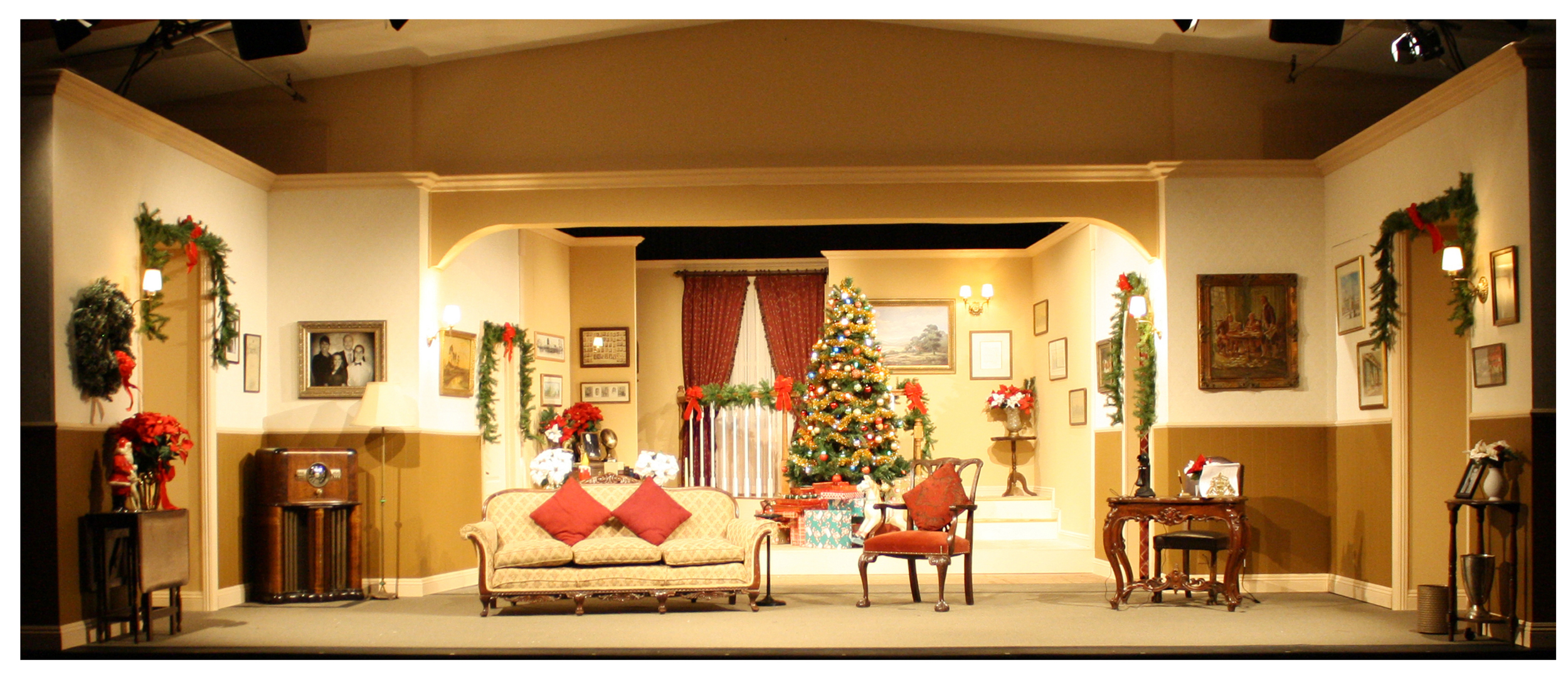
THE MAN WHO CAME TO DINNER
On The Man Who Came to Dinner, I wore three hats—co-director, set designer, and prop master—and the job was all about building a “real” house sturdy enough to survive the mayhem. Set in the late 1930s, the story lives almost entirely in an upper-middle-class home, and the comedy only works if the space feels authentic while still functioning like a machine. I designed the room to support rapid entrances, constant traffic, and escalating physical gags, with practical props and dressing that looked effortless but were engineered for timing.
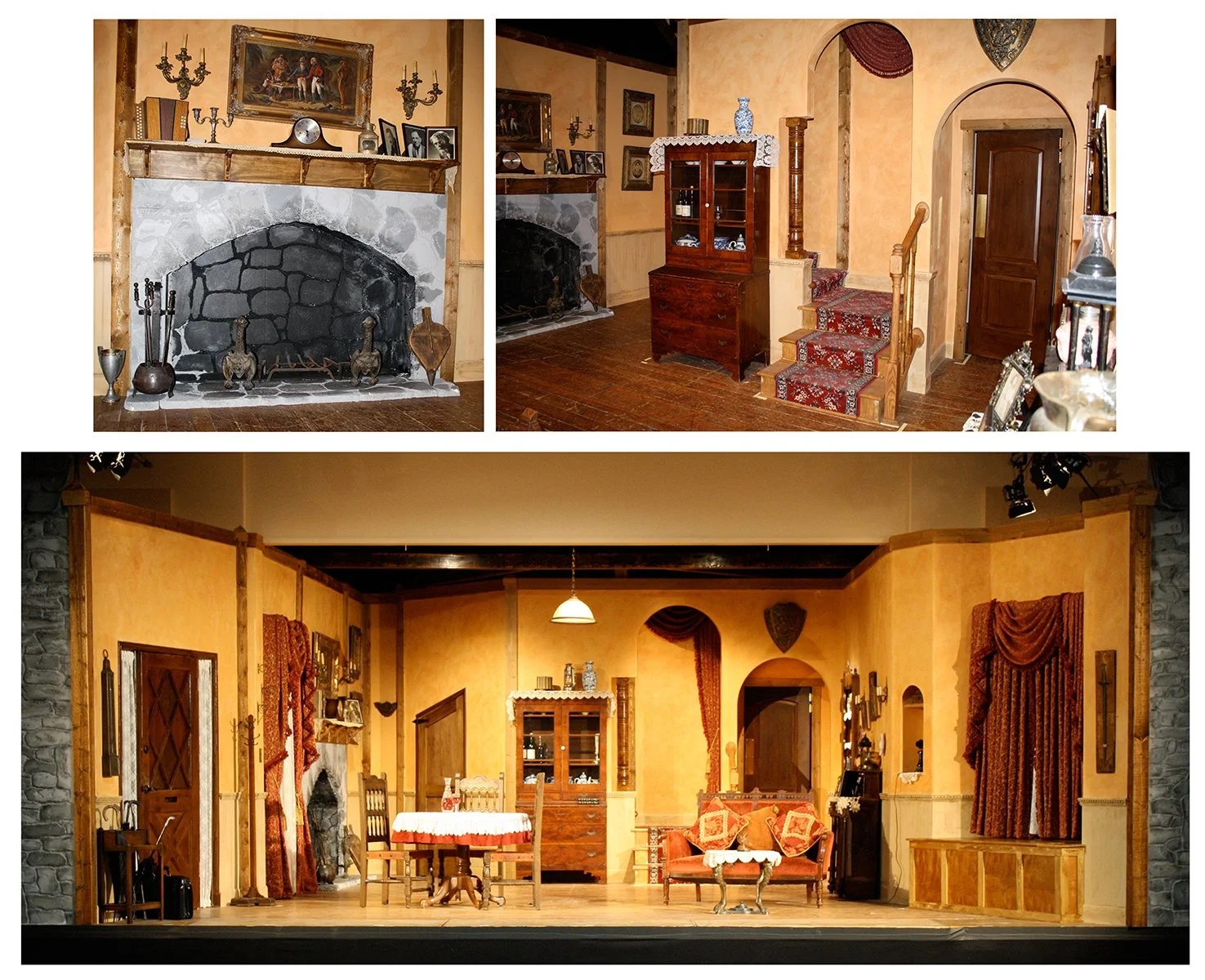
Arsenic and Old Lace
On Arsenic and Old Lace, I co-directed while also handling set design and prop mastering, which meant building a world that felt fully lived-in and period-correct from the ground up. The play is set in the early 1940s, so every choice — from furniture and dressing to paper goods and handheld props — had to reflect the look and function of that era without calling attention to itself. My focus was creating a believable, warm Brooklyn home on the surface, while supporting the show’s escalating dark comedy with practical, actor-friendly pieces that could handle the timing and physical business of live performance night after night.
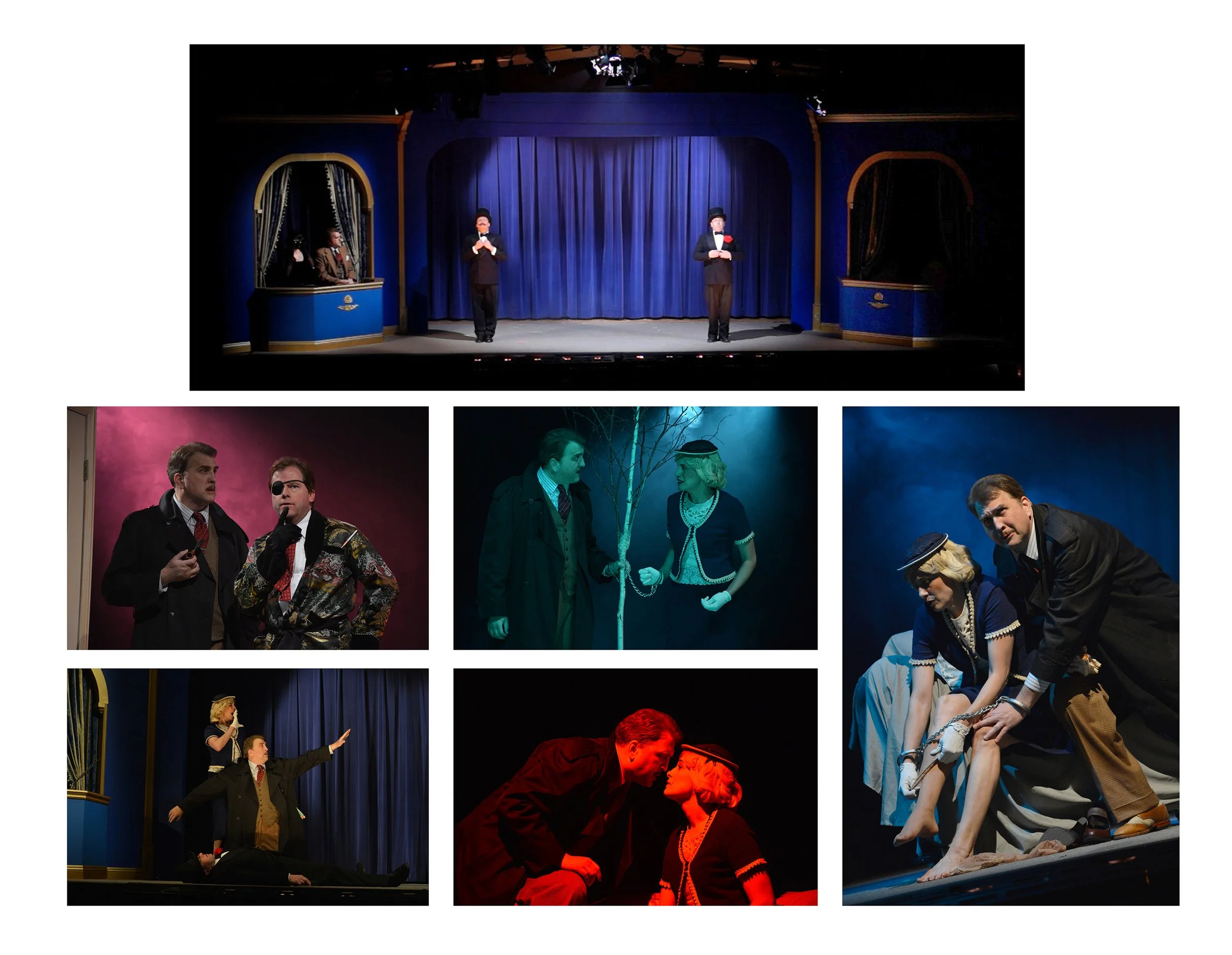
The 39 Steps
With The 39 Steps, we went the opposite direction: a creative, minimalist design that embraced the show’s speed and theatrical tricks. Co-directing while handling sets and props meant creating a flexible vocabulary—portable elements, multipurpose pieces, and prop choices that could instantly suggest a new location. Lighting and atmosphere did a lot of the heavy lifting on transitions, letting us whip from train to street to hotel to moorland in seconds, while the staging stayed clear and the comedy never lost momentum.